Εμφάνιση αναρτήσεων με ετικέτα In English. Εμφάνιση όλων των αναρτήσεων

Τρίτη 6 Ιουλίου 2010

A GREAT MIRACLE OF OUR LADY HOLY THEOTOKOS

A passenger’s experience in a plane about to crash!

This is a true account of events as described by a passenger aboard a plane, returning from the Holy Land on the 29th August 2003
We had a magnificent time. The previous day we had celebrated the Assumption of our Lady, at her Church were her resting place is, since this feast is celebrated in Jerusalem on the 28th August, that is, 13 days later than the date celebrated in Greece. We lived through a unique experience. Late in the afternoon we packed our bags and took part in the all night vigil at the Holy Sepulcher. Soon afterwards we boarded the bus which was waiting for us just outside the old city. The weather was good and the sky clear and starlit … read more…
When we eventually boarded the plane- if I remember correctly it was a twin engine Airbus- I noticed that its lights were twinkling all the time… I thought that some wire was not making contact properly and I sat deeply into my seat. .. When we took off the problem was less noticeable. I was sitting with my mother on the left side of the aircraft, in front of the wing….
Twenty minutes later we heard a loud noise and the aircraft started trembling and leaning on one side and then the other…The pilot told us in Hebrew and then in English to remain seated and fasten our seats. The stewardesses did the same. In the beginning we did not pay much attention to this, until I turned and saw one of the engines on fire. Pieces of burning metal were strewn in the air. After a reassuring preamble I showed it to my mother and my other friends. We tensed somewhat, but we didn’t show our concern. As I have learnt afterwards, some of us started praying with Jesus prayer.
A few minutes later the pilot confirmed that we had lost the left engine and that he was going to try to land at Eleftherios Venizelos airport in Athens, using the other engine…
Less than twenty minutes later we heard a similar, less loud noise and felt the same strong vibrations, mixed with turbulence. Some people, sitting on the right hand side shouted: “the engine is on fire”!
The atmosphere in the plane which up to then was mostly calm changed into panic. The aircraft was losing altitude quickly. I remembered that the noise which I was hearing, like a whistle, resembled the whistle bombs were making when falling. The stewardesses, which had started offering refreshments, secured the trolleys and run to their seats, fastened their seatbelts and put their heads on their knees.
Several people with heart problems and some elderly were taking pills two at a time. Spouses were publicly confessing when and where they had committed adultery and were asking for forgiveness. Grandfathers and grandmothers were asking for forgiveness from their grandchildren because they had not included them in their will, and grandchildren were apologizing for past inappropriate behavior. They were all receiving forgiveness. Friends were revealing that they had lied and calumniated against each other….
The plane started leaning on one side and we realized that the pilot was trying to turn back to either Tel Aviv, or Cyprus…
One priest stood up and said: “Do not be frightened, my brothers, let us pray. God will not abandon us”. The other priests put on their petrachili and started reading prayers, some others were reciting the Jesus prayer and the rest divided themselves into two groups and started reading the Prayers to our Lady ( Paraklisi tis Panayias) and the Salutations to our Lady (Xairetismoi) on the left and the right hand side of the cabin. We placed our hopes in our Lord and felt a lot better.
Non Christian passengers, a lot more scared than us, thought we had been singing and believed we had gone crazy.
This soothing attitude was suddenly broken by the voice of the captain: “As you have already realized we have lost the second engine a while ago, we have emptied our fuel tanks, and we will try to return to Ben Gurion airport but…” He suddenly stopped. We froze…. It is one thing to imagine something awful is about to happen and another thing to have it officially confirmed! After the initial uncomfortable moments we continued our prayers from where we had left off…. I was surprised that people, who seemed not to believe, had started praying feverishly…
I started to behave rationally, to the point of being accused of insensitivity. Hoping to console those who had been crying, I explained calmly: “We will all die one day. This cannot be changed. What is important therefore? How many years we will live and how we will live them. We all want to live for many years, but if God has decided otherwise, this cannot be changed. Besides, there is nothing we can do to save ourselves and we have not done it. Therefore, let’s take it for granted that today we will be called to account for our lives. What is therefore, left for us to do? …To honestly pray and ask sincerely for the forgiveness of our sins. But we must also place our hope in God. Why? Because, His infinite love for us, would not permit something to happen to the detriment of our souls. That means that if He decides to take our souls today, He will take us at the best moment of our lives. Most of us have confessed and took Holy Communion yesterday; therefore, we are ready as much as we will ever be. Think about what would have happened had we not been ready? Those of us who visited the Holy land did not do it as tourists but as worshipers. Do you think the Lord and our Lady, for whom we had made this trip, will abandon us?
Turbulence was continuing again quite strongly. We were flying low; I could distinguish the islands and the far away terrain. Then suddenly, the same priest who had pressed us to pray got up and said in a loud voice, full of conviction and with tears in his eyes:
“My children, please believe me. I can see our Lady, huge, standing in front of us, holding the plane by the belly!!!. We will be saved! We will be saved! And weeping he said: “Let us pray to thank her!”
Then all the passengers took heart and started chanting the Paraklisi, louder and happier this time. Even the stewardesses realized that something good was happening and they were consoled, looking amazed at us.
Soon, we could see clearly the buildings in Tel Aviv, since we had already been flying very low….The runaway was covered in white foam and many ambulances were already standing by. No other plane was in sight. They had obviously given us priority to land. We seemed to descend very quickly compared with other times ..
When the plane touched down it miraculously stopped after 50 meters, without anyone of us moving from his place even by a centimeter….( Even in a car, when one breaks suddenly, the passengers move forward) Nothing like this happened. The plane did not stop according to the law of physics but as if it was placed softly on the ground!
We all started praising the Lord and our Lady… Only the stewardesses had began having panic attacks….
After a while we got off the plane, accompanied by police, doctors and nurses and went to the waiting rooms. We had been offered refreshments and the officers were trying to comfort some people. Our mouths were dry, but none of us cared! We were alive, thanks to our Lord’s providence and we were feeling very thankful for this…
In the days that followed, I continued to be thankful. I was seeing everything as God’s creation; I would love it and admire it. I had stopped being angry and immerse myself in superficial things. I was trying to respond to God’s love by behaving with leniency, without judgment and helping others, as much as I could.
Unfortunately a week later, I returned to my daily routine. I am embarrassed to say but I could not preserve inside me the same unique feelings of serenity, prayer, love, gratitude….
(I have decided to write about this true experience at the instigation of a dear friend, as a show of gratitude to our Lord, and as an effort to spiritually support my brothers who maybe wavering. Please forgive the personal note of the account. I merely wished to describe my feelings and the events exactly as we had lived through them. Thank you for your understanding.)
Source: http://www.impantokratoros.gr/aeroplano
Translated from Greek by: Olga Konaris Kokkinos, journalist
http://vatopaidi.wordpress.com/2010/07/06

Τρίτη 29 Ιουνίου 2010

Prophecies on Antichrist by Archimandrite Lavrentios of Chernigov (+1950)

You will live to see the Antichrist!
The Abbess of Domnitskaya monastery, accompanied by two sisters came to have tea with Fr Lavrentios. During dinner he told them: “You and I, mother abbess, will not live to see the Antichrist, but they will live to see him!” This happened in 1948. Both sisters had been born in 1923. Sister N was one of the two and relayed the story to us. read more…
I must see.
Whenever Fr Lavrentios would sit down to have dinner, while waiting for everyone to take their seats, he would tell them: “ I am not hungry, but I must see all of you and talk to you about what will happen in the future”. Then his eyes would fill with tears and would say: “If only you knew what is going to happen to the world and what is going to happen in the future! If only you knew how much people are suffering in Hell!”
And how he will turn back!
This was cited by sister M.
Fr Lavrentios would say: “Do not be surprised if you hear that people will run to churches in every way they can, to pray. When those who wear the golden clothes, (Archimandrites and Patriarchs) forbid the reading of the Psalms and later of the Hours- the Lord will show patience for all these, but for a short while. And then, oh, how will He abandon them! Then the Second Coming will not be far away!”
Remember this!
“This happened when my father was still alive” said I. M, while remembering her conversation with Fr Lavrentios.
“We were very poor and it was impossible for us to build up our lives again after the destruction of the war. I went to see Fr Lavrentios, to receive his blessing in order to wear an inner robe ( so that I could become a nun secretly) , but he told me: “Not everyone who lives in the world will be lost, neither will all the monks inside a monastery be saved. “ Do you understand me? It is not yet time.”
I again started pleading with him to give me his blessing to enter a monastery, adding that it was extremely difficult for one to save his soul in the world. But Father told me: “The monks and those who wear the robes in the monasteries will succeed to enter the Seventh Heaven, but if only you knew what those who are pure at heart and live in the world will find! The Lord will tell the monks to make room for those who secretly lived a chaste life in the world and did not enter a monastery. And the latter will be in front of the former! Do you understand that for God the secret ones will be more privileged than those who live in the monasteries? Do you understand me?” asked Father.
“I do not understand anything”, I said.
“Just remember what I have told you just now, at least!” said Father.
If one lives according to the law of Love
A devout widow had this dream: “I saw Fr Lavrentios inside the Holy Trinity monastery of Servingov together with its inhabitants. There were many sisters there and the chorus was chanting: “ Hail Thou Queen”. Then suddenly, the elders were being lifted up in the air, but there were only 7-8 women along with the Father. I run to ask him why did he only have so few women with him but just as I was about to ask the question, I woke up without getting any reply”.
When I went to see Father Lavrentios he told me: “It is true that you had this dream! We have lived through this spiritual state together, but then everything ended. If one has a piece of bread he must share it with someone else, who in turn will pray for him. Therefore, both will benefit from their offerings and all will be saved. However, exactly the opposite happens with us. He, who has a piece of bread, tries to get many more pieces for himself. That’s why there are so few who are being advanced spiritually. It’s because there is no Love!”
Few will be saved
Blessed Father Lavrentios would often repeat that peoples’ souls descend to Hell, just like the people who go to Church on a feast day. But go to Heaven like those who go to Church during an ordinary day.
He would often sit and cry. He was feeling sorry for the people who could not be saved. “Ah! If only you knew how many people are cramped in Hell! They are like sardines in a barrel”.
His spiritual children would try to console him but he would not stop crying and would say to them: “You cannot see… But if you could see… it is very distressing! During the final days Hell will be filled with young people”.
Think about this.
“I tell you, and I say this with great distress. You will buy houses and you will spend your days smartening up the large and wonderful monasteries. But you will not have time for prayer, despite having given the oath of poverty!
It will not be difficult to be saved during the final days, but only if you act prudently and patiently. Anyone who rides over all these temptations will be saved! Such a person will be among the privileged. The first will glow like the lamps; the latter will shine like the sun. You must prepare another kind of residence for you. Therefore, listen and think about this.”
This is what the respected father would repeatedly say, seeing the future with his enlightened mind and warning many of his spiritual children.
During the awful years
“Not long before the appearance of the Antichrist, even those churches, which have been abandoned, will be repaired and restored- not only on the inside but also on the outside. They will spray gold on the domes of the Cathedrals, and when they finish the main one, the time has come for the enthronement of the Antichrist. Pray to the Lord, to lengthen this time, so that we are encouraged and find solace. There will be terrible times ahead of us. The restoration of the Cathedrals will last until the time of the enthronement of the Antichrist. There will be unprecedented cheerfulness”.
Father Lavrentios would also say: “Can you see how cunningly and slyly they prepare all this?”
Then, he would continue crying: “All the Cathedrals will be exceptionally magnificent, like they have never been before, but you must not go inside for the sacrifice of Jesus Christ, because it will not be offered there. You must remember: There will be many churches, but the Orthodox Christians must not enter them because the ‘Synagogue of Satan’ ( Rev. 2-9) will assemble there. I repeat once again. No one must assemble in the Cathedrals, because there will be no clemency to those who enter them!”
On Antichrist
“The Antichrist will be enthroned in a beautiful, restored temple (church) in Jerusalem in front of the clergy and the Russian Patriarch. There will be free entry into and out of Jerusalem for everyone, but do not try to go there because everything will be made so that ‘you will be deceived’. ( Math. 24-24) He (the Antichrist) will use perfectly well all the satanic flattery and will perform great wonders. The whole world will hear him and see him. He will stamp all people with Satan’s seal and will hate orthodox Russia”.
There is no need to be afraid
Father Lavrentios told a deacon, who is still alive but very old:
“You will live to see the times when the Antichrist will assume all authority. Do not be afraid. Warn everyone that it is him, but that there is no need for them to be scared! There will be a war and wherever he will pass by, no one will be left alive! But before this time, the Lord will send secondary illnesses to those who are weak, so that they may die, because during his time there will no longer be any death. The third world War will not be for repentance but for extermination. However,the Lord will allow those who are stronger to live, so that they will be able to face him.
The highest ‘peace maker’
Devout father Lavrentios, speaking often about the Antichrist, would say: “There will be a time when there will be fighting and fighting and a world war will break out. And in all this turmoil they will say: ‘Let us chose a King who will unite the whole world’. And they will elect him! They will elect Antichrist as the only King and the highest world ‘peace maker’. It is important that you listen very carefully. It is necessary that you exercise your ears so that they listen carefully! As soon as they start electing one man to lead the whole world, know that it is none other than him and that it is forbidden for the orthodox Christians to vote for him”.
My words are totally true
Father Lavrentios was sitting in the attic and was talking about the final days and the end of this world, and about the details regarding the enthronement of the Antichrist and those who have moved away from God. Then three priests, Nikiforos, Gregory and Basil Ganzin, opposed Father Lavrentios, saying that he was telling them different things about these matters. But he replied to them:
“ Fathers and brothers in Christ, there is one thing which you neither know nor understand. I speak not only about Russia but about the whole world! Everything I have said about the future events is true because the Holy Spirit has revealed these to me with His grace”.
For a short time
Archimandrite Theophanis was citing how Father Lavrentios was saying with a smile: “The Russians will repent for their deadly sins: because they had allowed the antichrist’s profanity to prevail in Russia so that they could keep their authority, because they did not protect God’s kingdom, the orthodox churches and monasteries and all that is sanctified in Russia and because they had ignored piety and loved satanic profanity. However, there will come a time when a sudden spiritual change will take place! Russia, together with the other Slav territories, will become a strong kingdom. It will be governed by an Orthodox King and God’s grace will be upon him. Because of him all schisms and heresies will disappear from Russia. There will be no more persecution of the Orthodox Church. The Lord will show His mercy upon Russia, because the terrible times which will come before the appearance of Antichrist, would have already come to pass in Russia. Even Antichrist himself will fear the Russian orthodox Kingdom.
The kingdom
“The Antichrist will govern all nations, apart from Russia and the Slav territories, and they will suffer all the calamities and persecutions written in the Scriptures. In Russia, however, there will be a feast and rejuvenation of Faith, but only for a short while, since the Judge will come to test both the living and the dead”.
On Antichrist occupying the Holy Seat
“Blessed will be he who will not be deceived from now on and will not see God in the dreadful face of Antichrist. Whoever will see him and listen to his blasphemies with which he will be promising earthy pleasures, will be deceived and will worship him. He who will do such a thing will be lost along with him and will burn in the eternal fire”.
We asked Father: “How will it be?”
He replied in tears: “This abomination of trouble will sit on the holy throne and will deceive, by his sorcerers ( those who perform deceitful wonders) those who will live far from God. After this, Antichrist will reveal himself! The whole world will see him at the same time.”
We asked him on which throne will he seat himself, in church or elsewhere and he replied: “Not in church, in the house”. In the old times people had the iconostasis, where they placed the holy icons. Nowadays, he will perform deceitful deeds to cheat people. Those who find themselves far from the Truth will say: ‘We must be careful and listen to the news. The Antichrist will be on the news and they will receive him”.
Source: www.Athos.edo.gr
Translated into English by: Olga Konaris Kokkinos, journalist
http://vatopaidi.wordpress.com/2010/06/29/

Τετάρτη 23 Ιουνίου 2010

Miraculous icons – Holy relics of the Holy monastery of Vatopedi

Fig. 80. 'Our Lady Paramythia'. Wall-painting from the chapel of this dedication in the katholikon, removed from the wall.
Georgios Mantzaridis
There are many miraculous icons and innumerable holy relics on the Holy Mountain; the greatest number of miraculous icons being those of Our Lady, the All-Holy Mother of God. In the Church of the Protaton one may see the icon called Axion estin; at the Monastery of Iveron, the Portaitissa; at the Monastery of Docheiariou, the Gorgoipekoos; at the Monastery of Chilandari, the Tricherousa; and there are others in other monasteries. But the greatest number of the miraculous icons of the Virgin is kept in the Holy Monastery of Vatopaidi: a) Our Lady Vematarissa or Ktitorissa, b) Our Lady Paramythia, c) Our Lady Esphagmeni, d) Our Lady Antiphonetria, e) Our Lady Eleovrytissa, f) Our Lady Pyrovoletheisa, and g) Our Lady Pantanassa.
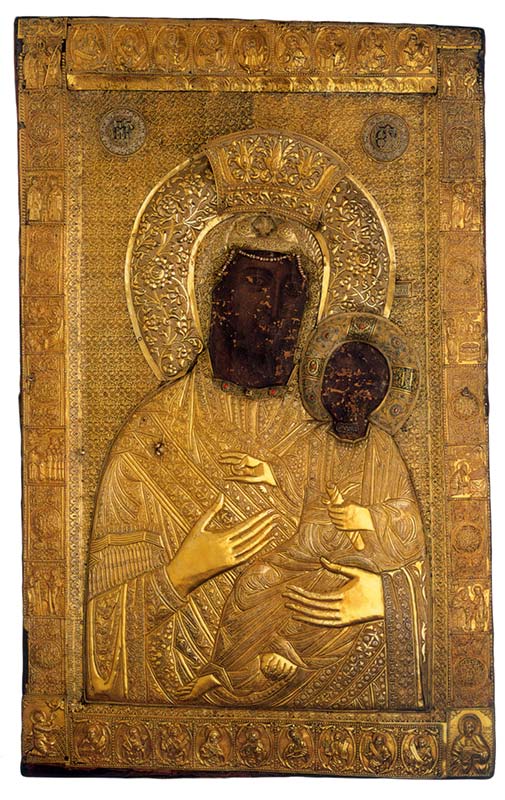
Our Lady Vematarissa or Ktitorissa (Fig. 3)
Our Lady Vematarissa or Ktitorissa (Fig. 3) is located on the synthronon* in the sanctuary of the Monastery’s katholikon and it is connected with the following tradition. In the tenth century, when the Arabs invaded the Monastery, the deacon-monk Savvas was quick to conceal the icon in the well of the sanctuary, together with the cross of Constantine the Great. He even managed to place in front of them a burning candle. This deacon-monk was eventually sent as a captive to Crete. But after 70 years, when he was released and returned as a very old man to the Monastery, he urged Nicholas, the Abbot of the Monastery, to have the well opened, and there they found the icon and the cross upright on the surface of the water with the candle still burning.
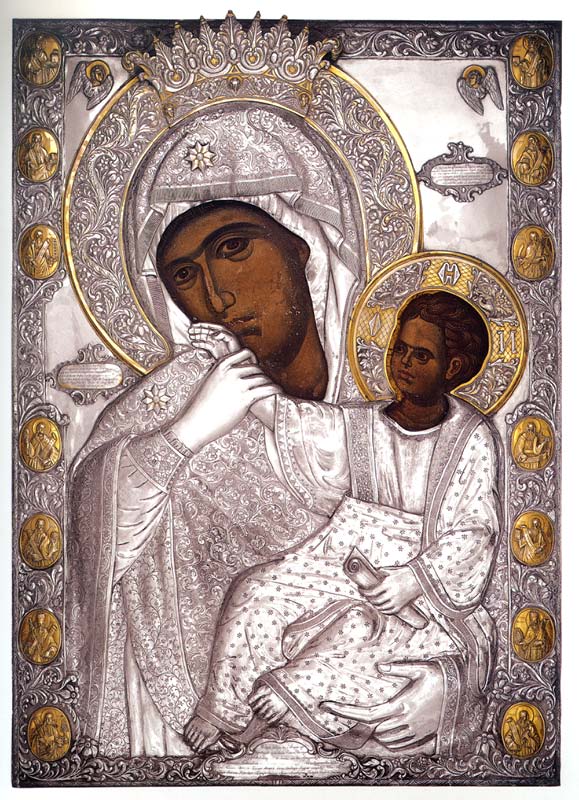
Our Lady Paramythia (Fig. 80) is to be found on the wall of the right hand choir in the chapel which bears the icon’s name. This icon has been removed from a wall-painting in the exonarthex of the katholikon and is dated by tradition to the 14th century. Tradition relates that on a certain day, when the Abbot was handing over the keys of the Monastery to the doorkeeper, he heard from the icon the exhortation that instead of opening the gate the monks must climb the walls of the Monastery in order to repel the pirates. The exhortation was repeated a second time. When the Abbot turned towards the icon, the Holy Infant extended His hand in order to cover the mouth of the Virgin. But the Virgin, taking hold of the hand of Christ and turning her face towards the Abbot, repeated the exhortation. Thereupon the monks sped to the walls of the Monastery and repelled the pirates who had already surrounded it. From that time forth the monks, out of gratitude, have kept a perpetual flame buning before the icon and also chant daily a service of supplication.
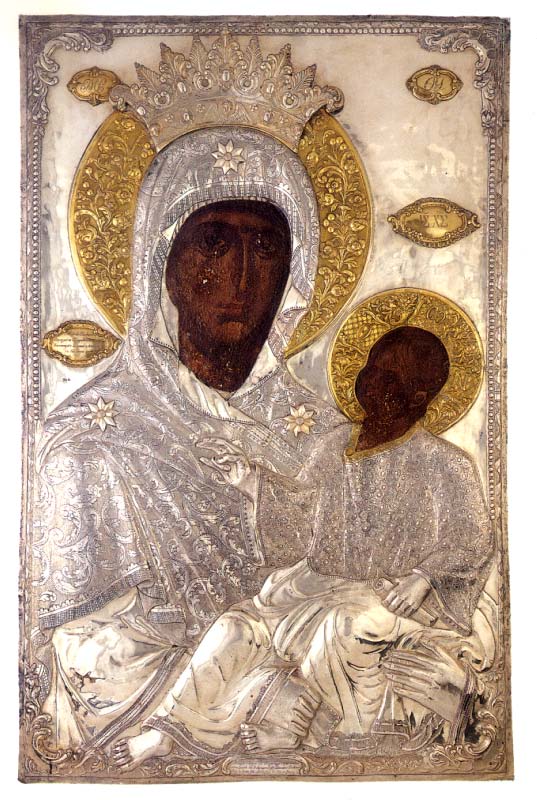
Fig. 81. 'Our Lady Esphagmeni'. Wall-painting of the 14th century in the narthex of the Chapel of St Demetrius.
Fig. 82. Detail of the face of the 'Esphagmeni'.
Our Lady Esphagmeni (Figs 81, 82) is a wall-painting in the narthex of the Chapel of St Demetrius (14th century). According to tradition, the verger of the katholikon, who by reason of his responsibilities usually arrived late at the refectory, one day ended up hungry because the monk whose duty it was to serve the food refused to give him a meal. Thereupon he went back to the church, turned indignantly towards the icon of Our Lady, remonstrated with her about the injustice, and struck her face with a knife. From the resulting wound, blood began to pour, while the monk himself was struck blind and collapsed unconscious. For three years he occupied the stall opposite the icon, weeping and begging for forgiveness. Finally the Virgin forgave him and healed him, but she allotted a punishment to the hand that had wounded her. Thus, after the monk had died and at his exhumation, although the rest of his body had decomposed, the right hand remained black and uncorrupted. This hand is preserved to this day in the katholikon of the Monastery.
Fig.83.' Our Lady Antiphonetria'. Wall-painting in the corridor between the Chapel of St Demetrius and the mesonyktion of the katholikon.
Our Lady Antiphonetria (Fig. 83), a wall-painting in the area of the narthex between the central nave and the exonarthex of the katholikon, took this name from the Virgin’s response to the Empress Placidia, daughter of Theodosius the Great. According to tradition, Placidia visited the Monastery on one occasion and attempted to enter the katholikon from the small side door. She then heard the following words from the icon: “What do you who are a woman want here in this territory of monks? Stay where you are and take not a step further”. Terrified, the Empress departed from the Monastery and constructed at her own expense and on that very spot the Chapel of St Demetrius.
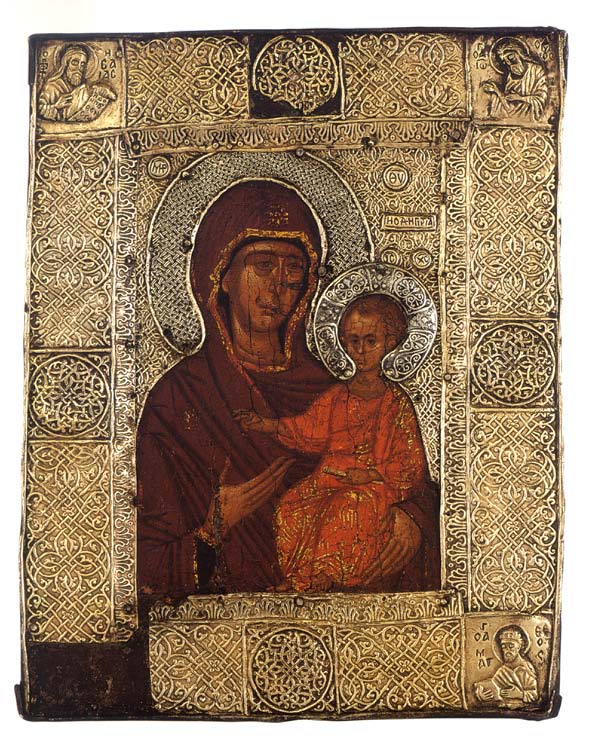
Figs 84. 'Our Lady Elaiovrytissa': portable icon of the 14th century (28 x 22 cm.) with silver revetment of the same period
The icon of Our Lady Eleovrytissa (Fig. 84) dates from the 14th century and is to be found in the oil storeroom of the Monastery. Her name is associated with the following miracle. Once, when there was a shortage of oil in the Monastery, the caretaker of the oil vessels, the Blessed Gennadius, provided oil only for the needs of the Church. However, the Monastery’s cook protested to the Abbot who, trusting in the providence of the Virgin, issued an instruction that oil should also be given to the brotherhood. In due course, on one of his visits to the storeroom, Gennadius observed that oil was spilling out of the vessels and had even begun approaching the door.
Our Lady Pyrovoletheisa is depicted on the lintel of the outer gateway to the Monastery. In April 1822, when a Turkish garrison came to the Monastery, one of the soldiers shot at the icon and a bullet pierced the right hand of the Virgin. Thereupon the soldier lost his reason and hanged himself from one of the olive trees in front of the Monastery, while the rest of the guard were terrified and fled.
Fig 85. 'Our Lady Pantanassa'. Portable icon of the 17th century.
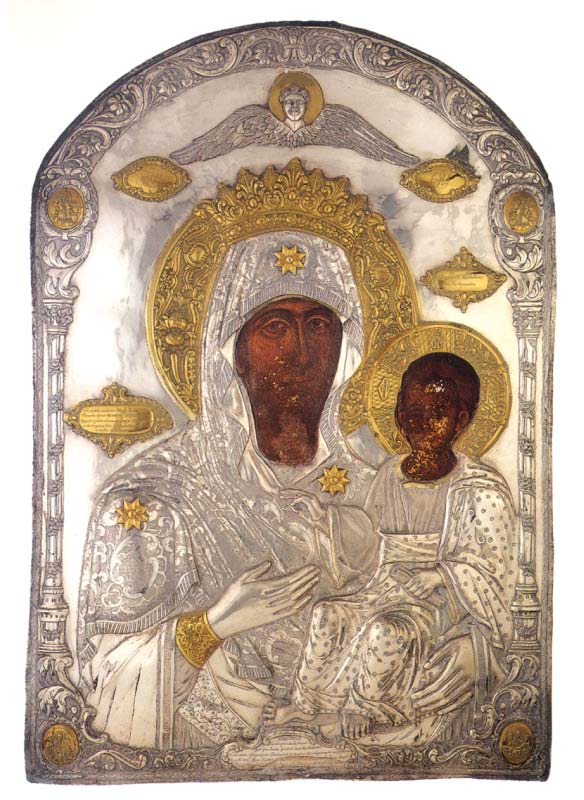
Our Lady Pantanassa (Fig. 85), an icon dating from the 17th century, is to be found on the left icon stand in the katholikon. The first miracle wrought by this icon is connected with a certain young man who was involved in black magic. When he entered the church and proceeded to venerate the icon, the face of the Virgin flashed and a powerful force threw him to the ground. The young man was overcome and changed his way of life. To this icon is also attributed healing of many cancer sufferers.
The truth of an icon lies in the person that it depicts. The truth of the icon of the Virgin lies in the person of the Virgin. That is what sanctifies and gives grace to the icon. Old sacred icons, no matter how worn they may be, are never discarded as useless objects, but rather they are either reverently set aside somewhere or are burnt to ashes. They are also used during the consecration of Chrism. Finally, in many instances, when the figure on an icon becomes obscured or even obliterated, the wood, or more generally the surface upon which it has been painted, is used for either a re-painting of the same image or for another icon altogether. There are many icons, even miraculous ones, dating back to very early periods, which survive today either with new, superimposed paintings or as re-paintings.
Matter is not be dissociated from God. It is His creation and it partakes in His creative and providential energy. In particular, that matter which presents the images of sacred persons, the icon, constitutes an object of respect and is “replete with divine energy and grace”1. However, this is not due to its having some distinctiveness in its nature, but because of its relationship with the person represented. An icon does not reveal the nature, it reveals rather the hypostasis of the one who is portrayed. In the icons of the Theotokos, it is not her nature which is revealed, but her hypostasis. For this reason we honour the icon in reference to the person. Every icon of the Virgin is the Virgin because it has her likeness. For this reason on an icon of the Virgin we do not read the attribution: “a representation of the Virgin”, but “the Theotokos”2. According to its nature, the icon is wood, metal, paint, or some other matter. However, in the light of its relationship with the person whom it portrays, it is the Virgin or the image of the Virgin. It is the Virgin as being the namesake of the one depicted, and the manifestation of her archetype3.
The icon operates by the grace of the figure who is portrayed. From this perspective any clear distinction between miracle-working and non-miracle-working icons is invalid. However, certain icons which have manifested very obvious grace and have been linked with specific miracles, are usually designated as miraculous. The grace of these icons establishes a particular blessing which can be linked also with the sanctity of the icon-painters who fashioned them. Moreover, in the Orthodox tradition, the close relationship between prayer and the creation of sacred icons is widely acknowledged. The icon-painters invest, so to say, their prayers in the icons and elicit the grace of the persons whom they are depicting. But even this grace is connected with the person portrayed, and in the final analysis it emanates from God. He it is who performs the miracle, irrespective of whether the request is referred directly to a certain saint4. By this means the person depicted, who refers back to his prototype, keeps open the communication of the believer with God.
The truth of the Church has a hypostatic quality. It inheres in the person and it is made manifest by the person. The features of a saint which are depicted in an icon make his presence tangible. Furthermore, the saint himself, and above all other saints the Theotokos, is a creation “in the image of God”. The affinity of man with God is grounded in the icon. Christ is “the icon of the invisible God”5. Man is a creature whose archetype is Christ. And the relationship of man to God is iconic, that is to say, personal, living, and true. This is why Orthodoxy is identified with the truth of the icons and is celebrated at the feast of their restoration. It suffices for the believer to regard the icon correctly and to be guided by it to the prototype.
The identification of Orthodoxy with the truth of the icons reveals its identification with the truth of the person or the hypostasis. For the Orthodox Church the absolute truth is the Tri-hypo-static God: the invisible God the Father, the Son of God, who is the icon “of the invisible God”6, and the Holy Spirit, who, as an icon “of the Son makes man a dwelling place of Christ by granting to him his hypostasis “in the image of God”7. Man matures as a hypostasis when he approaches the truth of the Tri-hypostatic God through man-made icons. This is why we have icons of Christ as well as those of the Virgin and of the saints. In this way, man, who possesses a body and is unable to relate directly to the spiritual world, is guided to these “for physical contemplation”8.
The natural icon can be distinguished from the prototype by its hypostatic hallmarks. Hence it has its own name. The natural icon of the Father is the Son. And the natural icon of the Son is the Spirit. On the other hand, the artifactual icon differs from the prototype according to its nature and has no significance without it. The name of the artifactual icon is the name of the prototype. The name of the icon of Christ is Christ, of the Theotokos is the Theotokos, etc. And the veneration of honour which is rendered to the icon is addressed to the prototype9. The icon is a ‘locus’ of encounter with the prototype10.
Correspondingly, just as the honour given to the icon is directed to its original, so is any insult offered to it. The miracles with which two of the wonder-working icons of the Monastery are connected are exemplary punishments for abusive acts. Our Lady Esphagmeni punished the one who had wounded her. And when he had demonstrated his sincere repentance, she allowed the abusive act to remain as a stigma with the black, uncorrupted hand. Our Lady Pyrovoletheisa brought the offender to despair. In this fashion not only was the Monastery liberated but the insult was held up to execration. Sacred philanthropy did not nullify divine order.
The Orthodox Church, in addition, greatly honours sacred relics, which constitute tangible evidence of the historical presence of the saints in the world. The Monastery of Vatopaidi is rich in holy relics. They number approximately a thousand items and derive from around 150 saints of the Church. Amongst these, special pride of place goes to the finger of St John the Baptist, the sacred skulls of St Gregory the Theologian (Fig. 86), of St John Chrysostom (Fig. 87), of the martyrs Mercurius (Fig. 472) and James the Persian, of the righteous founders of the Monastery: Nicholas, Athanasius, and Antony and the newly-revealed miracle-worker Evdokimos, and others; pieces of the sacred skulls of Stephen the first martyr, Modestus the priest martyr, Pelagia the virgin martyr, Theodosia the martyr of Constantinople, Charalampus the priest martyr, Sts Se-rgius, Bacchus, Theodore the Commander of Armies, Florus (Fig. 472), Arethas, and others. In addition, the Monastery possesses the right hand of the Apostle Andrew, and of St Macrina, St Panteleimon, St Tryphon, and St Procopius; the foot of the Apostle Bartholomew, and of Saint Parasceva the Younger, St Panteleimon, St Theodore the Tiro, Hermolaus the priest martyr; and a fragment of the right hand of the holy great martyr Catherine, and others.
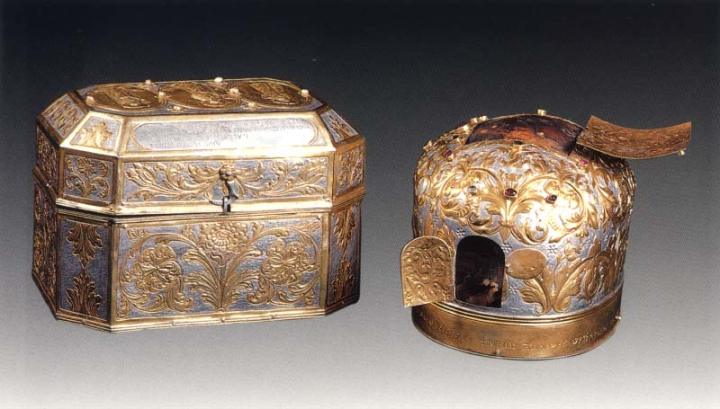
Fig. 86. The receptacle and reliquary with the head of St Gregory the Theologian.
The saints are Spirit-bearers not only for the period of their earthly existence but also after their death. The grace of the Holy Spirit remains indelibly in their bodies and does not separate itself from their sacred relics11. The relics, however, do not represent a prototype, as do the holy icons, but are tangible remains of the saints’ very bodies. The honour given to the relics of the saints is ho-
Figs 84 and 85 (next double page). ‘Our Lady Elaiovrytissa’: portable icon of the 14th century (28 x 22 cm.) with silver revetment of the same period; and ‘Our Lady Pantanassa’. Portable icon of the 17th century.
nour addressed to the saints themselves. Once again, it is an honour which is directed to their person or their hypostasis. In the case of sacred relics, we do not discern the saints’ forms; instead, it is matter itself that bears their particular grace, for grace resides in their sanctified bodies. And when the believer reverences the relics of a saint with faith and a pure heart, he comes into contact with the grace that dwells in them.
Fig. 87. The reliquary with the head of St John Chrysostom.
The Orthodox Church ascribes due veneration to those objects that are linked with the saving work of Christ, as well as to any personal possessions of the saints, such as the things which had any connection with their living or dead bodies. It is indeed characteristic that even these are called sacred or holy relics12. In everyday life the objects associated with loved ones, especially with those that have died, are preserved with love and respect. They are understood, in some way, as an extension of their bodies; as things which adorned their bodies. The same applies also to the objects that are associated with the saints. These in the same way are seen as having a link with the saint and are honoured as opportunities of reference to his person. Once more the reason that they are esteemed is the truth of the person. But the Spirit-bearing person opens up new perspectives. For this reason honour here is not fixed purely on the emotional level, a level whose existence is of course quite natural, but also on the ontological level. These objects preserve the grace of the saint because they were connected with his person and his life.
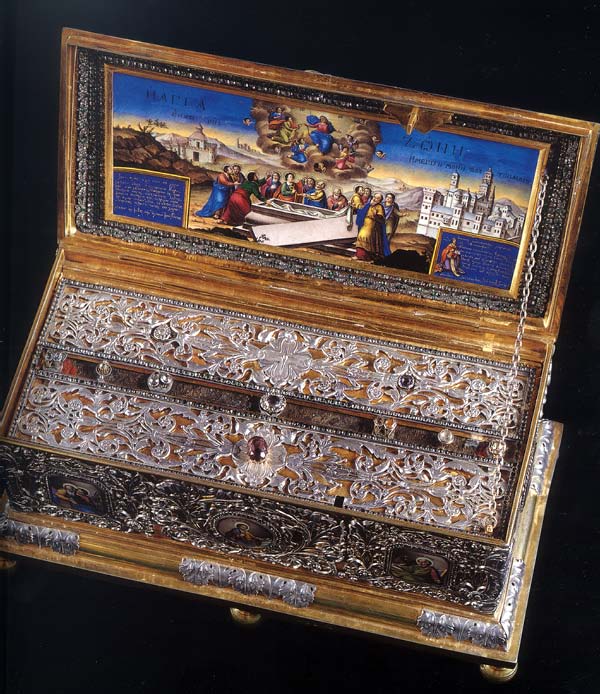
Fig. 88 . The reliquary with the large part of the Holy Girdle of the Theotokos.
Positions of primacy among the sacred objects which are in safekeeping at the Monastery are held by the fragments of the Life-Giving Wood of the Cross (Fig. 90) and the Reed of the Passion of Christ the Saviour13. Immediately after these comes the Holy Girdle of the Theotokos (Fig. 88), which is one of the rarest relics of her earthly life. According to tradition, the Holy Girdle was made by the Virgin herself from camel hair.
Fig. 89. Reliquary containing the head of St Evdokimos the Newly-Revealed. "At the expense and cost of Gavriil monk of Naousa and Physician of Vatopaidi. 1842 January 10".
The Empress Zoe, wife of Leo VI the Wise, out of gratitude for a miraculous healing, embroidered the Girdle with gold thread, which is how it survives today, but separated it into three sections. At first the Girdle was kept in Jerusalem and thereafter in Constantinople, where in the 12 th century, during the reign of Manuel I Comnenus (1143-1180), an official celebration in its honour was instituted on 31 August. Eventually, John VI Cantecuzenus (1347-1355), who entertained a particular affection for the Monastery of Vatopaidi, as is borne out by many testimonies, presented it to the brotherhood14.
Fig. 90. The reliquary and cross, with a large piece of the True Cross, given to the Monastery, according to tradition, by the Serbian noble Lazarus.
From that time on, the Holy Girdle has been kept at Vatopaidi, now in a silver case of more modern date, which has on it a depiction of the Monastery. In the bottom right hand corner of this, the craftsman has introduced the figure of the donor, the Emperor Cantecuzenus, with an inscription which refers to his gift to the Monastery. Innumerable are the miracles which have been wrought to this day by the Holy Girdle15. Its value is inestimable because of its connection with the Virgin. It is she who has the grace and to her is due the miraculous power which in a variety of ways is transmitted to the faithful.
Source : Ditomo of Holy Monastery of Vatopedi
http://vatopaidi.wordpress.com/2010/06/24/

Related Posts Plugin for WordPress, Blogger...